
An AI chatbot is a software application that uses artificial intelligence to understand, process, and respond to human language in real time. Unlike scripted bots that follow rigid decision trees, an AI chatbot learns from conversations, adapts to context, and delivers personalised responses -- making it an essential tool for modern UK businesses looking to scale customer interactions without scaling headcount.
How AI Chatbots Work#
At the core of every AI chatbot sits natural language processing (NLP) -- the technology that allows machines to interpret human language. When a customer types a question, the chatbot breaks the message into tokens, analyses intent, identifies key entities (such as product names, dates, or order numbers), and determines the most appropriate response. This happens in milliseconds, giving the impression of a natural conversation.
Machine learning (ML) takes this a step further. Each interaction feeds data back into the model, allowing the chatbot to improve over time. If customers frequently ask about delivery times in a particular way, the chatbot learns to recognise that pattern and respond more accurately. According to IBM research, organisations that deploy AI chatbots see up to a 70% reduction in call, chat, and email enquiries within the first year.
Modern AI chatbots don't operate in isolation. They integrate with CRM systems, e-commerce platforms, helpdesk software, and payment gateways to pull real-time data. A customer chatbot on an e-commerce site, for instance, can check stock levels, track orders, and process returns without ever handing off to a human agent. This level of integration is what separates a genuinely useful AI chatbot for business from a basic FAQ widget.
The latest generation of chatbots also leverages large language models (LLMs) -- the same technology behind tools like ChatGPT. These models understand nuance, handle multi-turn conversations, and can even adjust their tone to match your brand voice. Combined with retrieval-augmented generation (RAG), they can pull answers from your specific knowledge base rather than relying solely on pre-trained data.
AI Chatbot vs Traditional Chatbot#
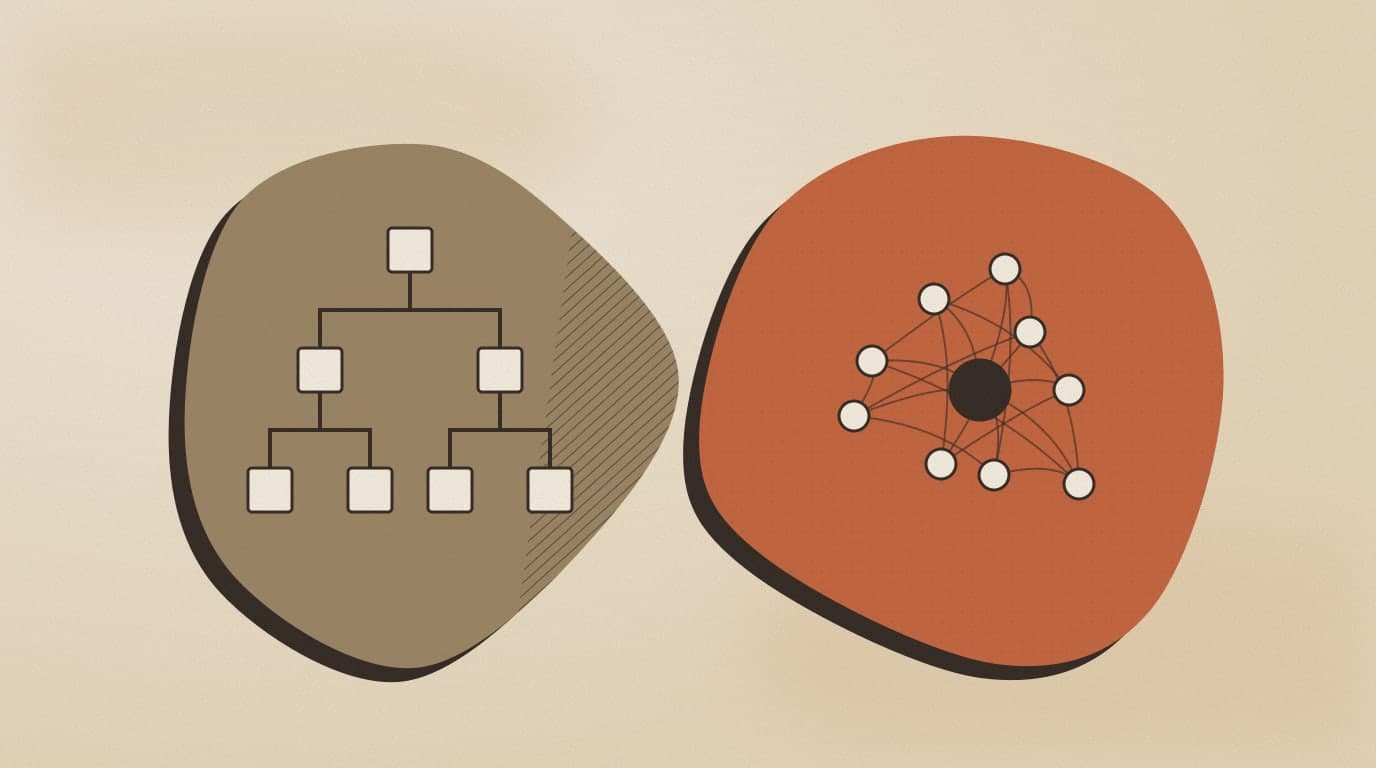
An AI chatbot uses machine learning and NLP to understand free-form language, while a traditional chatbot relies on pre-written scripts and keyword matching. The difference affects every aspect of performance, from accuracy to scalability.
| Feature | Traditional Chatbot | AI Chatbot |
|---|---|---|
| Understanding | Keyword matching only | Full natural language understanding |
| Responses | Pre-scripted, rigid | Dynamic, context-aware |
| Learning | No improvement over time | Continuously learns from interactions |
| Complex queries | Fails or escalates immediately | Handles multi-step conversations |
| Setup effort | High (requires scripting every path) | Moderate (trains on existing data) |
| Personalisation | None | Adapts to user history and preferences |
| Multilingual | Requires separate builds per language | Supports multiple languages natively |
| Maintenance | Constant manual updates | Self-improving with periodic review |
For UK businesses handling more than a handful of customer queries per day, the limitations of a traditional chatbot quickly become apparent. An AI chatbot scales with demand and actually gets better the more it is used.
Key Benefits of AI Chatbots for Business#
AI chatbots deliver measurable cost savings, faster response times, and higher customer satisfaction. For UK businesses competing in crowded markets, these advantages translate directly into revenue and retention.
1. Significant cost reduction According to Juniper Research, AI chatbots are projected to save businesses globally over $11 billion annually by 2026. For a mid-sized UK company, automating even 50% of routine enquiries can reduce customer service costs by 30-40%. Paired with workflow automation, the savings compound across departments.
2. 24/7 availability UK consumers increasingly expect round-the-clock support. A Salesforce study found that 69% of consumers prefer chatbots for quick communication with brands. An AI chatbot handles enquiries at 2am on a Sunday just as effectively as at 10am on a Tuesday -- no shift rotas, no overtime costs.
3. Faster response times The average customer expects a response within 60 seconds on live chat. Human agents juggling multiple conversations struggle to meet this. AI chatbots respond instantly, and according to Comm100, chatbots achieve an average satisfaction rate of 87.58% when they are the sole channel handling a conversation.
4. Improved lead qualification An AI chatbot for business doesn't just answer questions -- it qualifies leads. By asking targeted questions, collecting contact details, and scoring intent, chatbots pass higher-quality leads to your sales team. HubSpot data indicates that companies using chatbots for lead generation see a 67% increase in qualified leads.
5. Consistent brand experience Human agents have off days. Chatbots don't. Every customer receives the same level of service, the same accurate information, and the same brand tone. This consistency builds trust, especially for businesses operating across multiple channels.
6. Actionable customer insights Every conversation generates data. AI chatbots track common questions, pain points, sentiment trends, and drop-off points. This intelligence feeds directly into product development, marketing strategy, and service improvements -- turning your support channel into a research tool.
Industries Using AI Chatbots in the UK#
AI chatbots are used across virtually every sector in the UK, from retail to healthcare. The common thread is high-volume customer interaction where speed, accuracy, and availability matter.
E-commerce and retail UK online retail is a fiercely competitive space. AI chatbots handle product recommendations, order tracking, size guides, and returns processing. Brands like ASOS and Marks & Spencer have deployed AI chatbot solutions to manage peak-season demand without proportionally increasing support staff. For Magento, Shopify, and WooCommerce stores, chatbot integration is now straightforward and cost-effective.
Financial services Banks and fintech companies use AI chatbots for balance enquiries, fraud alerts, mortgage calculators, and appointment booking. Gartner predicts that by 2027, chatbots will become the primary customer service channel for roughly a quarter of organisations. UK financial institutions are already well on their way, with Lloyds, NatWest, and Monzo all operating AI-driven support.
Healthcare NHS trusts and private healthcare providers use chatbots for appointment scheduling, symptom checkers, prescription reminders, and patient triage. The NHS App itself incorporates AI elements to route patients to appropriate services, reducing pressure on GP surgeries and A&E departments.
Professional services Law firms, accountancy practices, and consultancies deploy chatbots to handle initial client enquiries, book consultations, and provide basic information about services and pricing. This frees up billable professionals to focus on high-value work rather than answering repetitive questions.
Travel and hospitality Hotels, airlines, and travel agencies use AI chatbots to manage bookings, provide real-time travel updates, handle cancellations, and offer personalised recommendations. With UK travel rebounding strongly, chatbot adoption in this sector has accelerated significantly.
How to Get Started with an AI Chatbot#
Getting started with an AI chatbot requires a clear strategy, not just a software purchase. These four steps will set your business up for a successful deployment.
1. Define your objectives and scope Start by identifying the specific problems you want the chatbot to solve. Is it reducing support ticket volume? Qualifying leads? Handling out-of-hours enquiries? A focused scope delivers faster ROI than trying to automate everything at once. Map out the top 20-30 questions your customers ask most frequently -- this becomes your chatbot's initial training data.
2. Choose the right platform and partner The AI chatbot market is crowded, and not every solution suits every business. Consider factors like integration with your existing tech stack, language support, customisation options, and data privacy compliance (particularly GDPR, which is non-negotiable for UK businesses). Working with a specialist agency like BrightBit Digital ensures your chatbot is built to your exact requirements rather than shoe-horned into a generic template.
3. Train, test, and refine Feed the chatbot your knowledge base -- FAQs, product documentation, policies, and previous support transcripts. Then test rigorously with real-world scenarios before going live. Pay particular attention to edge cases: what happens when the chatbot doesn't know the answer? A well-designed fallback (such as a seamless handoff to a human agent) is just as important as the AI itself.
4. Launch, monitor, and optimise Go live with a soft launch to a subset of users, monitor performance metrics (resolution rate, satisfaction scores, escalation rate), and iterate. The best AI chatbots are never "finished" -- they improve continuously through conversation data, feedback loops, and regular model updates. Pair your chatbot with workflow automation to maximise the impact across your operations.
Frequently Asked Questions#
How much does an AI chatbot cost for a UK business? Costs vary widely depending on complexity, integrations, and conversation volume. Simple chatbots with limited scope can start from a few hundred pounds per month, while enterprise-grade solutions with custom training and deep integrations typically require an upfront build investment of several thousand pounds plus ongoing optimisation. The ROI, however, often justifies the cost within three to six months.
Will an AI chatbot replace my customer service team? No. AI chatbots handle routine, repetitive enquiries -- freeing your human agents to focus on complex, high-value conversations that require empathy, judgement, and creative problem-solving. Most businesses find that chatbots complement their team rather than replace it, leading to higher job satisfaction among support staff.
Is an AI chatbot GDPR-compliant? It can be, but compliance depends on implementation. Data must be processed lawfully, stored securely, and users must be informed they are interacting with a chatbot. Choosing a provider that hosts data within the UK or EU and offers transparent data processing agreements is essential. At BrightBit Digital, GDPR compliance is built into every chatbot project from day one.
How long does it take to build and deploy an AI chatbot? A well-scoped chatbot can be built and deployed in four to eight weeks, depending on the complexity of integrations and the volume of training data. Simpler deployments using pre-built frameworks can go live in as little as two weeks, while highly customised solutions for complex workflows may take longer.
Ready to Build Your AI Chatbot?#
If you are a UK business looking to reduce support costs, improve response times, and deliver a better customer experience, an AI chatbot is one of the highest-impact investments you can make. The technology is mature, the ROI is proven, and your competitors are already moving.
BrightBit Digital specialises in building custom AI chatbots for UK businesses -- from scoping and design through to deployment and ongoing optimisation. We build chatbots that integrate with your existing systems, reflect your brand, and actually solve problems for your customers.
Get in touch to discuss your AI chatbot project and find out how we can help your business work smarter.

AI engineer at BrightBit Digital