
Traditional chatbots follow fixed rules and decision trees, responding only to pre-programmed keywords. AI chatbots use natural language processing and machine learning to understand context, learn from conversations, and handle unpredictable queries - making them far more flexible, accurate, and capable of delivering human-like interactions at scale.
What Is a Traditional Chatbot?#
A traditional chatbot - sometimes called a rule-based or scripted chatbot - operates on a predefined set of if/then rules. When a user types a message, the bot scans for specific keywords or phrases and returns a matching scripted response.
These bots work well for simple, repetitive tasks. Think FAQ pages brought to life: "What are your opening hours?" triggers one answer, "How do I reset my password?" triggers another. If the user asks something outside the script, the bot either fails silently or routes the conversation to a human agent.
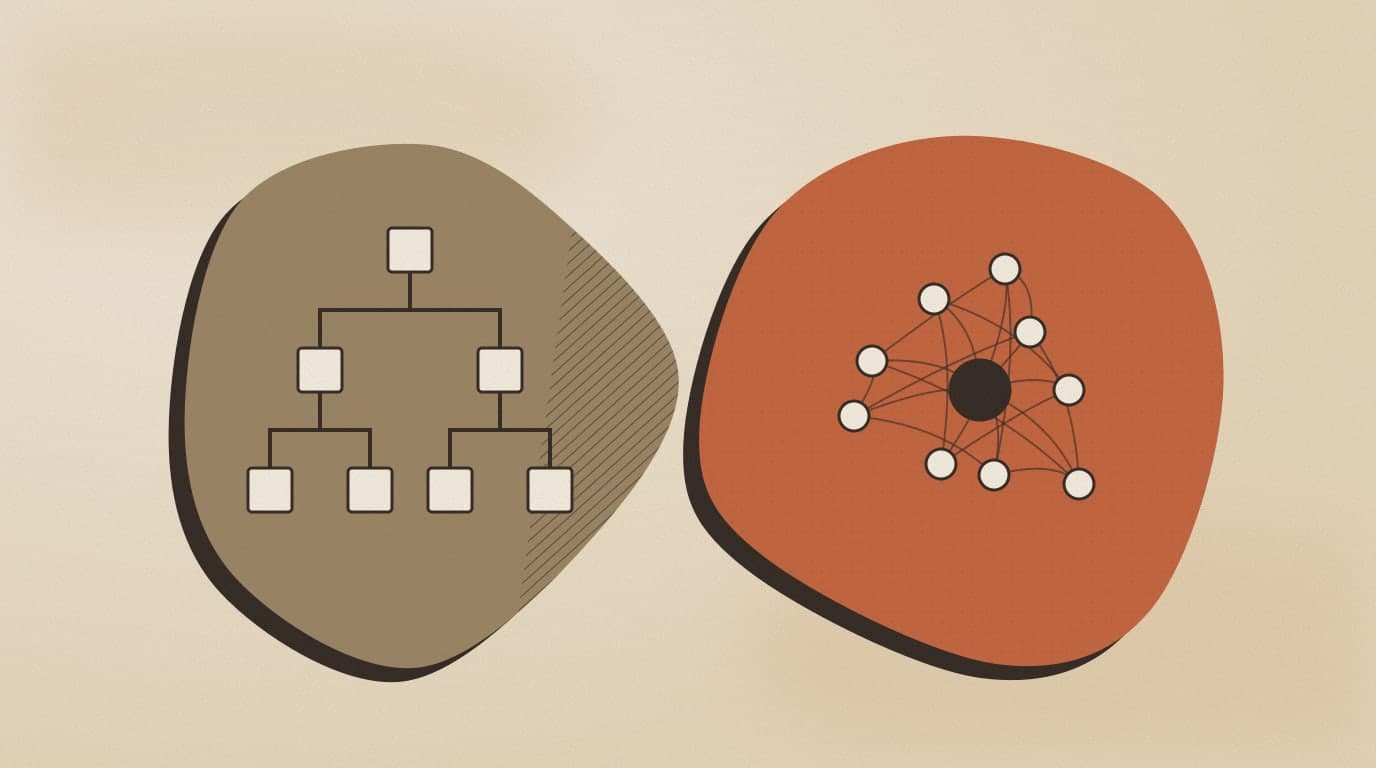
Traditional chatbots are built using decision trees, and every possible conversation path must be manually mapped out. This makes them predictable and easy to control, but severely limited in scope.
What Is an AI Chatbot?#
An AI chatbot uses natural language processing (NLP), machine learning (ML), and increasingly large language models (LLMs) to understand user intent rather than just matching keywords. It can interpret misspellings, slang, complex sentence structures, and multi-turn conversations.
Unlike rule-based systems, AI chatbots improve over time. They learn from every interaction, refine their responses, and can handle queries they have never encountered before by drawing on their training data and contextual understanding.
Modern AI chatbots can also integrate with CRMs, order management systems, and knowledge bases to pull real-time information - making them capable of genuinely resolving customer issues, not just deflecting them. At BrightBit Digital, we build custom AI chatbots that connect directly to your business systems for precisely this reason.
Generative AI vs Chatbots: Clearing Up the Terminology#
"AI vs chatbot" is a common search, but it is slightly the wrong framing - the terms describe different layers of the same stack:
- A chatbot is the interface: any software that converses with users through text or voice. Both rule-based bots and AI-powered bots are chatbots.
- Generative AI is a technology: models (like GPT or Claude) that generate new text rather than selecting from pre-written responses. It is what powers modern AI chatbots, but it also powers writing assistants, code tools, and image generators.
- An AI chatbot is what you get when you put the two together: a conversational interface driven by a generative model, usually grounded in your business data so it answers accurately rather than inventively.
So the real comparison is not "generative AI vs chatbot" - it is generative-AI-powered chatbots vs scripted chatbots. A scripted bot retrieves a canned answer; a generative AI chatbot composes a response to the actual question, drawing on your documentation, policies, and live systems. That is the difference the rest of this article quantifies.
One step further sit AI agents, which do not just answer but act - updating records, triggering workflows, escalating with full context. If your use case involves doing things rather than just saying things, see our AI agents service.
AI Chatbot vs Traditional Chatbot: Key Differences#
| Feature | Traditional Chatbot | AI Chatbot |
|---|---|---|
| Understanding | Keyword matching only | Natural language understanding with context |
| Conversation flow | Fixed decision trees | Dynamic, multi-turn dialogue |
| Handling unexpected queries | Fails or escalates | Interprets intent and responds intelligently |
| Learning | Static - requires manual updates | Continuously improves from interactions |
| Setup complexity | Low - map out scripts | Moderate - requires training data and integration |
| Personalisation | Minimal | Tailors responses to user history and behaviour |
| Multilingual support | Requires separate scripts per language | Native multilingual capability |
| Integration depth | Basic - links and redirects | Deep - CRM, databases, APIs, knowledge bases |
| Scalability | Limited by script coverage | Scales to thousands of topics without manual scripting |
| Response quality | Robotic and predictable | Conversational and human-like |
The difference is not merely technical. It fundamentally changes what a chatbot can do for your business. A traditional chatbot answers questions. An AI chatbot solves problems.
When to Choose a Traditional Chatbot#
Traditional chatbots still have their place. They are the right choice when:
- Your use case is narrow and well-defined. If you only need to handle 10-20 common questions with fixed answers, a scripted bot does the job without over-engineering.
- Budget is extremely tight. Rule-based bots are cheaper to build and maintain, making them suitable for very small businesses or MVPs.
- You need total control over every response. In regulated industries where every word matters (and creative AI responses could be a liability), scripted bots guarantee exact wording.
- Your audience expects simple navigation. Some users prefer clicking buttons in a guided flow rather than typing free-form messages.
The trade-off is clear: you get predictability at the cost of flexibility. The moment a customer asks something outside your script, the experience breaks down.
When to Choose an AI Chatbot#
For most businesses looking to genuinely improve customer experience and operational efficiency, an AI chatbot is the stronger choice. The data backs this up:
- Businesses using AI chatbots report a 70% reduction in call, chat, and email enquiries (Gartner, 2025).
- AI chatbots can resolve up to 80% of routine customer queries without human intervention (IBM).
- Companies deploying AI assistants see an average 30% reduction in customer service costs (Juniper Research).
- 62% of consumers now prefer interacting with a chatbot over waiting for a human agent (Tidio, 2025).
Choose an AI chatbot when:
- You handle high volumes of diverse enquiries. AI chatbots thrive when questions are unpredictable and varied - exactly the scenarios where rule-based bots collapse.
- You want to reduce support costs at scale. Handling thousands of conversations simultaneously without adding headcount is where AI delivers real ROI.
- Personalisation matters. AI chatbots can greet returning customers by name, recall previous interactions, and tailor recommendations based on purchase history.
- You need multilingual support. Rather than building separate scripts for each language, AI chatbots handle translation natively.
- You want to qualify leads automatically. AI chatbots can ask qualifying questions, score leads, and route high-intent prospects to your sales team in real time.
If your business falls into any of these categories, explore our custom AI chatbot solutions to see what is possible.
Cost Comparison#
Pricing varies significantly depending on complexity, integrations, and provider. Here is a realistic breakdown for UK businesses in 2026:
| Cost Factor | Traditional Chatbot | AI Chatbot |
|---|---|---|
| Initial build | £500 - £3,000 | £3,000 - £25,000+ |
| Monthly maintenance | £50 - £200 | £200 - £1,500 |
| Per-conversation cost | Near zero (static responses) | £0.01 - £0.05 (API/token costs) |
| Scaling cost | Linear (more scripts = more cost) | Marginal (handles new topics without rebuilds) |
| Time to deploy | 1-2 weeks | 3-8 weeks |
| ROI timeline | Immediate but limited | 2-6 months, then accelerating |
The upfront investment for an AI chatbot is higher, but the total cost of ownership often works out lower within 12 months - particularly for businesses handling more than 500 conversations per month. The key difference is that traditional chatbot costs scale linearly with complexity, while AI chatbot costs remain relatively flat as you expand coverage.
To see what those numbers look like for your business, run your ticket volume and support costs through our free AI chatbot ROI calculator - it gives you a conservative annual savings estimate in about 30 seconds.
For businesses that need deep integration with existing systems such as knowledge bases or workflow automation, the AI route also avoids the compounding cost of maintaining ever-larger decision trees.
Making the Right Choice for Your Business#
Choosing between an AI chatbot and a traditional chatbot comes down to three questions:
1. How complex are your customer interactions? If 90% of your enquiries are identical and have one correct answer, a traditional bot may suffice. If customers ask questions in different ways, need context-aware responses, or require multi-step problem solving, you need AI.
2. What is your growth trajectory? Traditional chatbots do not scale gracefully. Every new product, service, or FAQ requires manual script updates. AI chatbots absorb new information and adapt. If you plan to grow, build for scale from the start.
3. What is the cost of a poor customer experience? A chatbot that cannot answer a customer's question is worse than no chatbot at all. If your brand reputation depends on responsive, helpful interactions, the reliability gap between rule-based and AI becomes a business-critical factor. According to PwC, 59% of consumers will walk away from a brand after several bad experiences, and 17% will leave after just one.
For most businesses in 2026, the question is no longer whether to adopt an AI chatbot, but how quickly they can implement one effectively.
Frequently Asked Questions#
Can I start with a traditional chatbot and upgrade to AI later?#
Yes, but it is rarely a smooth transition. Traditional chatbots and AI chatbots are built on fundamentally different architectures. Migrating means rebuilding from the ground up rather than upgrading in place. If there is any chance you will need AI capabilities within 12-18 months, it is more cost-effective to start with a lightweight AI solution and expand from there.
Are AI chatbots reliable enough for customer-facing use?#
Modern AI chatbots built on fine-tuned models with proper guardrails are highly reliable. The key is implementation quality - grounding responses in your actual business data, setting clear boundaries for what the bot should and should not answer, and maintaining a seamless handoff to human agents for edge cases. A well-built AI chatbot resolves queries more accurately than a traditional bot because it understands intent, not just keywords.
How long does it take to train an AI chatbot for my business?#
A custom AI chatbot typically takes 3-8 weeks to deploy, depending on the complexity of your use case and the number of integrations required. The initial training phase involves feeding the bot your existing documentation, FAQs, and conversation logs. After launch, the bot continues to improve as it handles real conversations - most businesses see measurable performance gains within the first 30 days.
Ready to find out which approach suits your business? Talk to our team about a custom AI chatbot - we will help you assess your needs and build a solution that delivers real results from day one.

AI engineer at BrightBit Digital